
Owner & investor brief · reviewed 21 September 2026
Build the hotel kiosk business case around operating control—not a machine.
For owners and investors, the decision is whether the property can handle routine arrivals consistently while managers and staff retain control of exceptions.
The situation owners recognise
A guest arrives while the front desk is serving someone else. A late arrival calls the owner because the night process depends on one person. A payment is complete but the key handoff is unclear. None of these moments is dramatic on its own, yet together they make growth harder to manage.
The pressure is not simply “too few staff.” It is that routine arrivals, unusual exceptions and system handoffs compete for the same attention. A kiosk project should separate those paths without making the welcome feel abandoned.
Our view: capacity comes from a designed arrival system
A kiosk can give eligible guests another route through reservation lookup, identity steps, payment, registration and key collection. That creates operating capacity only when the PMS, payment terminal, lock system and staff response are designed as one workflow. Buying hardware first leaves the most important questions unresolved.
Five parts of a credible business case
1. Operating continuity
Identify the arrivals that currently depend on a particular person, shift or phone call. The business case should show how routine journeys continue, what remains staffed and exactly when a guest is handed to a person.
2. Arrival capacity at the real peak
Use the hotel’s own arrival pattern. Count simultaneous arrivals, check-in duration, queue space and the share of guests eligible for self-service. The aim is not to claim a universal time saving; it is to see whether an additional channel removes a verified bottleneck.
3. Owner and manager dependence
Record which questions and exceptions are escalated to the owner today. A stronger operating model assigns clear responsibility for booking mismatches, room-not-ready cases, declined payments, identity exceptions and key failures.
4. Complaint and operating risk
Review where guests become uncertain: what they owe, whether payment succeeded, where to collect a key and how to request help. The proposed workflow should make status visible and preserve a staffed alternative. It must also define recovery from network, PMS, payment or dispenser interruption.
5. Repeatable expansion
If the first property works, document which parts can be reused and which remain property-specific. PMS configuration, payment, locks, identity policy, languages, lobby space and support ownership must be confirmed for each site rather than assumed.
How MythAsia scopes the mechanism
We begin with the current guest journey and the systems already in place. Together with the hotel team, we map the routine path, common exceptions, data handoffs, device responsibilities and acceptance evidence. Only then do we match the workflow to a suitable kiosk form factor and integration scope.
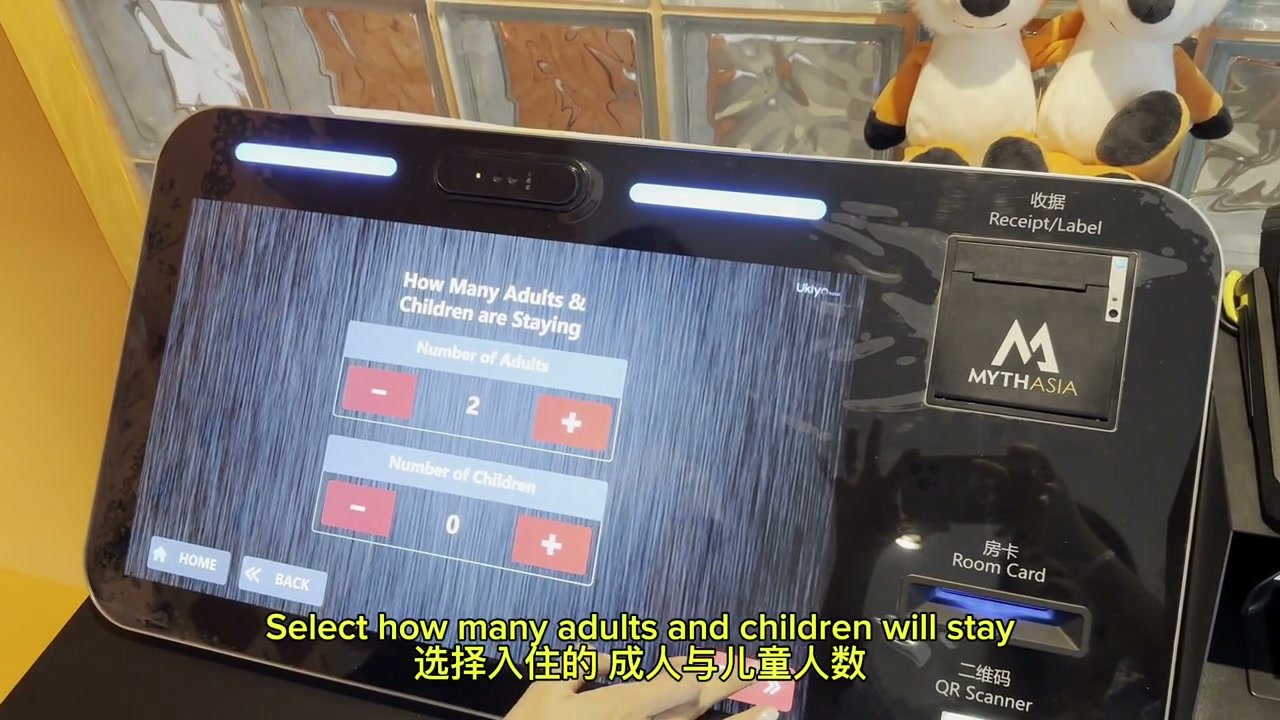

Review the hotel self check-in kiosk workflow for product scope, or inspect the real M100 and deployment evidence.
What the hotel should measure before deciding
- Arrival volume and queue conditions by hour, day and booking source.
- The share of arrivals that follow a stable routine versus those needing staff judgement.
- Where the owner, manager or night contact is called into the process.
- Payment, identity, room-ready and keycard exceptions and the responsible responder.
- The acceptance evidence required from the PMS, payment, registration and key systems.
This baseline supports a decision using the hotel’s own facts. MythAsia does not publish a fixed saving percentage, ROI or payback period because property volumes, staffing models, integrations and scope differ.
Limits and objections worth addressing early
“Our guests still want a person.”
A dual-channel model keeps staff available while giving eligible guests another route. The design should never hide the help path or force every guest into self-service.
“A kiosk could create a new point of failure.”
It can, if recovery and ownership are undefined. Acceptance testing should cover booking not found, room not ready, payment interruption, identity mismatch, key failure and loss of connectivity before launch.
“We need a financial answer first.”
Start with measured arrival demand, current escalation effort, implementation scope and ongoing support. A financial model is useful only after those inputs are known; a generic percentage would conceal rather than reduce uncertainty.
What happens in a hotel arrival workflow assessment
MythAsia reviews the property type, arrival peaks, booking sources, current PMS, payment terminal, keycard system, identity requirements, languages, lobby placement, exception owners and target rollout. The output is a clearer proposed scope for a demonstration or quotation—not a promise that every arrival should be automated.
Prepare with the 12-point buyer’s checklist and the front-desk operating guide.
Frequently asked questions
Does a hotel kiosk replace the front desk?
It can handle defined routine steps for eligible guests, while staff remain responsible for exceptions, assistance and the operating situations that need judgement.
How should an owner evaluate a hotel kiosk?
Measure the current arrival flow, identify bottlenecks and escalations, verify integration and recovery responsibilities, and agree on acceptance evidence before comparing equipment.
Can MythAsia provide a standard ROI or payback period?
No universal figure is responsible without the property’s actual volumes, staffing model, integration scope and costs. MythAsia can help define the operating inputs needed for the hotel’s own business case.