
2026 decision guide · reviewed 21 September 2026
Five front-desk workflows Malaysian hotels should evaluate before buying more technology.
The useful question is not “Which trend should we follow?” It is “Which guest or staff workflow should become clearer, faster and easier to control?”
Start with the lobby at its busiest
Hotels do not need automation everywhere. They need it where repetitive work, fragmented systems or unclear handoffs create avoidable waiting for guests and extra work for staff. At a real arrival peak, one team member may be answering a question while another guest is ready for a predictable check-in. Start by mapping that operating moment, then decide which technology belongs in it.
Use two arrival channels, not one forced journey
Self-service should give eligible guests a clear route while staff remain visible for assistance and judgement. Define which reservations can use the kiosk, which guests should go directly to the desk and how either channel can hand over without repeating every step.
1. Reservation lookup and self-service arrival
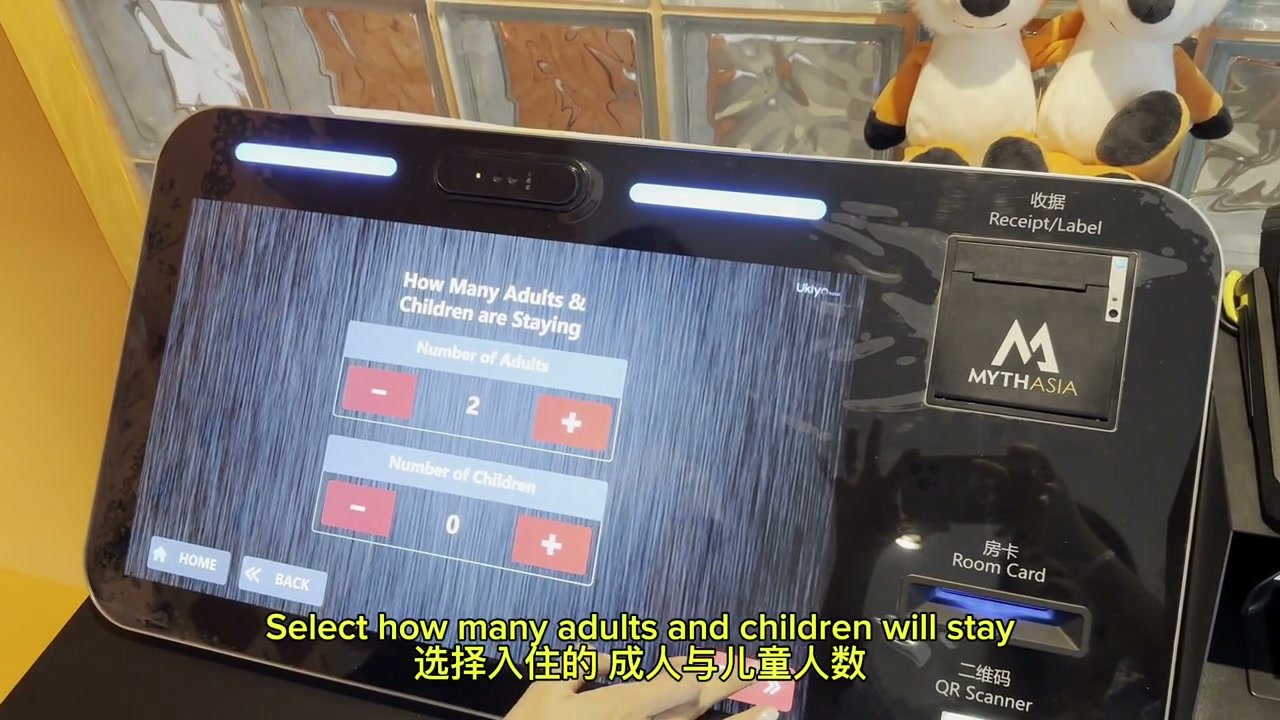
A self check-in flow should help a guest find the correct reservation, choose a language, verify required information and understand what happens next. The kiosk is only one part of the experience; the reservation source, exception handling and front-desk response still need to be defined.
2. Identity verification with a clear purpose
Passport or NRIC capture and face comparison can reduce manual transcription, but only when the property defines why the check is needed, who reviews exceptions, how consent is handled and how records follow hotel policy and applicable requirements.
3. Payment, deposit and tax collection
Outstanding charges are a common point of friction. A good workflow makes the amount, reason, payment method and successful result clear to the guest while synchronizing the outcome with hotel operations.
4. Digital registration and e-signature
Turning a paper registration card into a digital form can reduce printing and filing. More importantly, it can prevent repeated data entry and give the team a traceable status for documents that are pending or complete.
5. Keycard issuance and PMS synchronization
The arrival is not complete until the guest receives usable room access and the operational record is updated. Evaluate the kiosk, lock system and PMS as one connected handoff, including what staff should do when a room or keycard is not ready.
Make exception ownership part of daily readiness
Before each operating day, the team should know who responds when a booking is not found, a room is not ready, payment is interrupted, identity details need review or a key cannot be issued. Confirm the help channel, system status, staffed fallback, replenishment needs and after-hours escalation before the first peak begins.

A sensible starting scope
Choose one property, one arrival type and one measurable operational problem. Document the current process, identify integrations and exceptions, then test the new journey with staff before expanding. This produces a stronger business case than adopting technology only because it appears in a trend list.
What automation should not promise
It should not assume every guest wants self-service, every system is always available or every hotel operates the same way. Keep a staffed path, test recovery and use the property’s own arrival evidence rather than a universal saving or payback claim.
For a deeper supplier evaluation, use the 12-point hotel self check-in kiosk buyer’s checklist.
Owners and investors can also use the hotel kiosk business-case framework; product teams can inspect the MythAsia kiosk workflow and real operating evidence.